
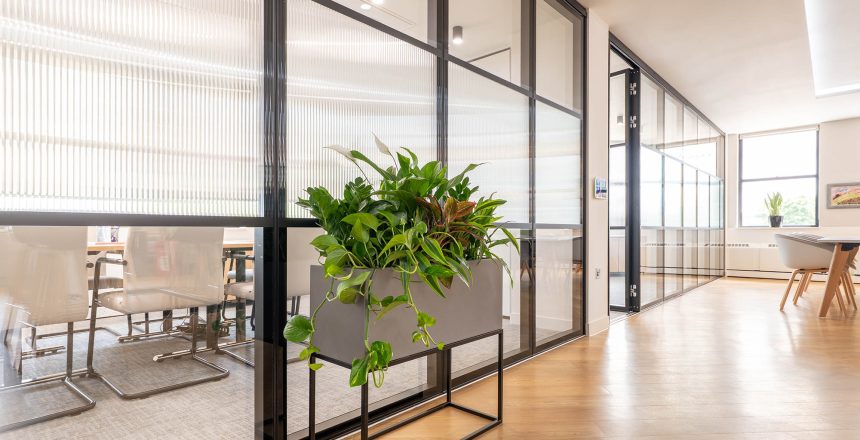
Walk into almost any modern office and you’ll notice one thing many of the best workplaces have in common – plants. From impressive palms greeting visitors in reception to smaller desk plants bringing life to individual workstations, office plants have become an essential part of workplace design.
But choosing the right plants isn’t always straightforward. Every office has different lighting conditions, varying amounts of available space and different levels of maintenance that can realistically be provided. A plant that flourishes in a bright reception area may struggle in a windowless meeting room, while some species require far more attention than busy businesses can spare.
So, what are the best office plants? The answer depends on your environment and your objectives. Some businesses prioritise creating a striking first impression for visitors, while others simply want low-maintenance greenery that helps make the workplace feel calmer and more welcoming.
The good news is that there are plenty of beautiful indoor plants that thrive in commercial environments. Whether your office enjoys lots of natural daylight or relies largely on artificial lighting, there are species perfectly suited to your space.
In this guide, we’ll explain what makes a great office plant, how to choose the right varieties for your workplace and highlight some of the most reliable, attractive and easy-to-care-for plants used in offices across the UK. We’ll also look at the benefits of professional office plant hire and explain why many businesses choose a managed planting service rather than looking after plants themselves.
Why Office Plants Matter
Office plants are often viewed as decorative features, but their value extends far beyond appearance. Carefully selected indoor planting can transform the atmosphere of a workplace, creating an environment that feels more welcoming, professional and enjoyable for everyone who uses it.
Whether you’re welcoming clients into reception, hosting meetings or providing employees with an inspiring place to work, introducing natural greenery can have a surprisingly positive impact.
They Create a Positive First Impression
Your office says a great deal about your business. Clients, suppliers and potential employees often begin forming opinions within moments of arriving, long before a conversation has even started.
An office filled with healthy, well-maintained plants immediately communicates professionalism, attention to detail and pride in your workplace. Large architectural plants positioned in reception areas, elegant planting around meeting rooms and carefully designed displays throughout communal spaces all help create a lasting impression.
By contrast, an office with no greenery can sometimes feel cold, clinical or uninspiring.
For businesses that regularly welcome visitors, office plants are one of the simplest ways to enhance the appearance of commercial premises without undertaking costly refurbishments.
Plants Make Offices Feel More Comfortable
Most offices are filled with hard surfaces. Glass partitions, computer screens, desks, filing cabinets and artificial lighting can create an environment that feels functional but lacking in warmth.
Plants introduce colour, texture and natural forms that soften these surroundings.
Rather than feeling like a purely practical workspace, the office becomes somewhere employees genuinely enjoy spending time. This can be particularly valuable in open-plan environments where thoughtful interior design helps create a more comfortable atmosphere.
Even something as simple as adding greenery to breakout spaces or quiet working areas can make these environments feel noticeably more inviting.
Supporting Employee Wellbeing
Employee wellbeing has become a major focus for businesses across every sector.
While office plants are certainly not a replacement for good workplace practices, they can contribute towards creating an environment where people feel happier and more relaxed.
Many employees naturally prefer working in spaces that include elements of nature rather than stark commercial interiors. Greenery introduces visual variety throughout the day, helping to break up rows of desks, monitors and office furniture.
A well-designed office filled with living plants often feels calmer and more welcoming than one consisting solely of artificial materials.
Creating pleasant surroundings also demonstrates that employers have invested in the quality of the workplace, something many employees appreciate.
Encouraging Productivity and Creativity
Numerous workplace studies have explored the relationship between office design and employee performance.
Although plants alone won’t transform productivity, they play an important role within a thoughtfully designed workspace.
Comfortable environments tend to help employees feel more engaged throughout the working day. Adding greenery helps reduce the sterile appearance of many offices while creating a setting that feels more balanced and enjoyable.
Creative businesses in particular often incorporate planting into collaborative spaces where teams meet, brainstorm and develop ideas together.
Plants Can Improve Acoustics
One often-overlooked advantage of office planting is its ability to soften noise.
Open-plan offices frequently suffer from sound travelling across large spaces. Conversations, telephones and office equipment can quickly create distracting background noise.
While plants won’t completely soundproof an office, larger foliage displays help absorb and diffuse some ambient noise, contributing to a quieter working environment.
Living green walls and groups of larger plants can be particularly effective when incorporated into open-plan layouts.
Office Plants Complement Modern Interior Design
Office design has evolved considerably over the past decade.
Many businesses now favour bright, open spaces featuring natural materials, sustainable design principles and biophilic design — an approach that seeks to reconnect people with nature indoors.
Plants play a central role in achieving this aesthetic.
Whether your workplace has a minimalist contemporary style or a more traditional corporate appearance, indoor planting adds softness, colour and movement that artificial décor simply cannot replicate.
Modern planters are available in a wide range of finishes, allowing planting schemes to complement existing branding and interior design.
What Makes a Plant Suitable for an Office?
Not every houseplant is suited to commercial premises.
Unlike homes, offices typically experience fluctuating temperatures, air conditioning, central heating and long periods of artificial lighting. Some areas may receive very little natural daylight, while others are exposed to direct sunlight throughout the day.
The best office plants are those capable of adapting to these changing conditions while requiring relatively little maintenance.
Typically, the ideal office plant will:
- Thrive indoors throughout the year.
- Tolerate varying light levels.
- Require infrequent watering.
- Grow slowly enough to remain manageable.
- Stay attractive with minimal pruning.
- Resist common indoor pests.
- Continue looking healthy even during weekends or holiday closures.
These characteristics explain why certain plant species appear repeatedly in offices around the world—they’re reliable, resilient and consistently attractive.
How to Choose the Best Office Plants
Selecting the right office plants isn’t simply about choosing your favourite species. A successful planting scheme considers the practical realities of the workplace alongside the visual impact you want to achieve.
Professional office plant designers carefully assess each environment before recommending suitable plants, ensuring every display thrives for years rather than just a few weeks.
Here are the most important factors to consider.
Consider the Available Light
Light is the single biggest factor determining whether an indoor plant will thrive.
Before choosing any plants, take time to observe how much natural daylight different areas of your office receive throughout the day.
Bright Offices with Plenty of Natural Light
Large windows provide ideal growing conditions for many popular office plants.
Species including Kentia Palms, Rubber Plants, Monstera Deliciosa and Peace Lilies all perform particularly well in bright environments with indirect sunlight.
However, direct sunlight through south-facing windows can sometimes scorch delicate leaves, so positioning remains important.
Low-Light Offices
Many commercial premises have surprisingly little natural light, especially those located in city centres or converted buildings.
Fortunately, several species have evolved to thrive beneath forest canopies, making them perfectly suited to shaded indoor environments.
Excellent low-light office plants include:
- Snake Plant
- ZZ Plant
- Dragon Tree (Dracaena)
- Devil’s Ivy (Pothos)
- Cast Iron Plant
These varieties remain healthy even when positioned away from windows, making them ideal for meeting rooms, corridors and interior office spaces.
Offices Using Artificial Lighting
Modern LED office lighting is often sufficient for many indoor plant species.
Professional office plant companies regularly design installations specifically intended for artificially lit environments, selecting plants known to tolerate these conditions exceptionally well.
Where necessary, specialist grow lighting can also be incorporated into larger commercial planting schemes.
Consider the Maintenance Required
Some indoor plants demand frequent watering, misting, pruning and feeding.
Busy workplaces rarely have the time or expertise to provide this level of care consistently.
For this reason, most businesses prefer hardy, low-maintenance species capable of remaining healthy with relatively little attention.
The easiest office plants typically require:
- Watering every two to four weeks.
- Occasional dusting of leaves.
- Seasonal feeding.
- Light pruning once or twice each year.
- Repotting every few years.
For businesses wanting the benefits of greenery without any maintenance responsibilities, professional office plant hire services provide regular visits to water, feed, clean and replace plants whenever necessary, ensuring displays remain attractive all year round.
The Best Office Plants for Every Workplace
Now that you know what to look for, it’s time to answer the question: what are the best office plants?
The ideal office plant should look attractive throughout the year, cope well with indoor conditions and require little maintenance. The following plants are among the most popular choices for businesses across the UK, offering a combination of style, resilience and practicality.
Snake Plant (Sansevieria trifasciata)
The Snake Plant is widely regarded as one of the easiest office plants to care for. Its upright, architectural leaves add height and structure to any room, making it equally at home in a modern reception area or beside a desk in an open-plan office.
Native to West Africa, the Snake Plant has evolved to withstand dry conditions, making it extremely forgiving if watering is occasionally forgotten. In fact, overwatering is one of the few ways to damage this hardy species.
It also performs exceptionally well in low-light environments, making it ideal for offices with limited natural daylight or rooms lit primarily by artificial lighting.
Why it’s a great office plant:
- Thrives in low light
- Requires very little watering
- Modern, architectural appearance
- Excellent for busy workplaces
- Long lifespan with minimal care
Best location: Reception areas, corridors, meeting rooms and individual offices.
ZZ Plant (Zamioculcas zamiifolia)
If your office has darker corners where other plants struggle, the ZZ Plant is one of the best choices available.
Its glossy, dark green leaves remain attractive throughout the year, giving offices a polished and contemporary appearance. Beneath the soil, the plant stores water within thick rhizomes, allowing it to cope with extended periods between watering.
This resilience has made the ZZ Plant one of the most widely specified plants by professional office plant designers.
Although slow growing, its neat shape means it rarely requires pruning, making it an ideal low-maintenance option.
Benefits of the ZZ Plant:
- Extremely drought tolerant
- Performs well under artificial lighting
- Minimal maintenance required
- Attractive glossy foliage
- Suitable for smaller office spaces
Best location: Desks, shelving, meeting rooms and internal offices.
Peace Lily (Spathiphyllum)
For businesses looking to introduce a little elegance into the workplace, the Peace Lily is a timeless favourite.
Its deep green leaves are complemented by beautiful white flowers, creating a sophisticated display throughout much of the year. Peace Lilies are particularly popular in receptions and executive offices where appearance is a priority.
One useful feature of the Peace Lily is that it often signals when it needs watering by allowing its leaves to droop slightly. Once watered, it quickly recovers, making it relatively straightforward to care for.
The Peace Lily has long been associated with air-purifying qualities, making it one of the most recognised indoor office plants.
Why businesses choose Peace Lilies:
- Elegant white blooms
- Lush tropical foliage
- Compact growth habit
- Suitable for premium office interiors
- Adds colour without being overpowering
Best location: Reception desks, boardrooms and executive offices.
Kentia Palm (Howea forsteriana)
If you’re looking to create an impressive first impression, few plants rival the Kentia Palm.
Its graceful arching fronds create an immediate sense of luxury while remaining understated enough for professional environments. Unlike many palms, the Kentia Palm grows relatively slowly and adapts well to indoor conditions.
Large specimens are often positioned either side of reception desks, in hotel-style entrances or within premium meeting spaces where they become natural focal points.
Despite its impressive size, the Kentia Palm is surprisingly easy to maintain when professionally cared for.
Advantages of a Kentia Palm:
- Creates instant visual impact
- Adds height and elegance
- Tolerates indoor environments well
- Long-lasting and durable
Ideal for premium office interiors
Best location: Reception areas, atriums, boardrooms and waiting areas.
Rubber Plant (Ficus elastica)
The Rubber Plant has become increasingly popular in modern office interiors thanks to its bold, glossy foliage and clean, contemporary appearance.
Available in both green and burgundy-leaved varieties, it provides strong visual contrast against neutral office décor.
Rubber Plants appreciate bright, indirect light and can eventually grow into impressive feature plants when given sufficient space.
Their thick leaves are easy to keep clean, helping them maintain their polished appearance throughout the year.
Why choose a Rubber Plant?
- Striking glossy leaves
- Contemporary appearance
- Suitable as a statement plant
- Easy to maintain
- Available in several attractive varieties
Best location: Bright offices, receptions and collaborative workspaces.
Dragon Tree (Dracaena)
The Dragon Tree is one of the most versatile office plants available.
Its slender trunk and fountain-like foliage add height without taking up excessive floor space, making it particularly useful in offices where every square metre counts.
There are numerous varieties of Dracaena, ranging from green-leaved species to colourful cultivars featuring cream, yellow or red-striped foliage.
The Dragon Tree is also known for coping well with changing indoor conditions, making it a dependable option for busy commercial premises.
Key benefits include:
- Slim profile suits compact offices
- Attractive architectural shape
- Low maintenance
- Tolerates artificial lighting
- Available in multiple varieties
Best location: Corridors, meeting rooms, receptions and open-plan offices.
Pothos (Devil’s Ivy)
Pothos is a trailing plant that introduces softness and movement into an office environment.
Unlike upright plants, its vines can cascade from shelves, filing cabinets or hanging planters, creating a more relaxed and informal atmosphere.
It grows quickly under favourable conditions yet remains remarkably tolerant of lower light levels, making it a versatile addition to many workplaces.
Its heart-shaped leaves are available in several attractive colour variations, including green, golden and variegated forms.
Why businesses like Pothos:
- Fast growing
- Excellent trailing plant
- Easy to propagate
- Thrives in various lighting conditions
- Softens hard office lines
Best location: Shelves, breakout spaces, kitchens and high-level displays.
Philodendron
Philodendrons are prized for their lush tropical foliage and adaptability.
With numerous species available, businesses can choose compact varieties for desks or larger climbing types for statement displays.
Their broad leaves introduce a softer, more organic feel into contemporary office interiors while remaining relatively easy to care for.
Philodendrons generally prefer bright, indirect light but tolerate moderate shade surprisingly well.
Advantages include:
- Attractive tropical appearance
- Numerous varieties available
- Easy to maintain
- Excellent indoor performance
- Ideal for modern office design
Best location: Meeting rooms, collaborative spaces and executive offices.
Spider Plant (Chlorophytum comosum)
The Spider Plant has remained a workplace favourite for decades, and for good reason.
It’s incredibly forgiving, easy to propagate and well suited to hanging baskets or elevated shelving.
Its arching green-and-white striped leaves create movement while helping brighten smaller spaces.
Spider Plants also produce small plantlets, adding extra visual interest as they mature.
Benefits include:
- Ideal for beginners
- Very low maintenance
- Compact growth habit
- Attractive striped foliage
- Suitable for hanging displays
Best location: Breakout areas, kitchens and shelving.
Monstera Deliciosa
Few plants have become as synonymous with modern interior design as the Monstera Deliciosa.
Recognisable by its large split leaves, the Monstera brings bold tropical character into commercial interiors without appearing overly decorative.
As it matures, its distinctive foliage becomes increasingly dramatic, making it a superb feature plant for larger offices.
Although it appreciates bright spaces, it adapts well to typical indoor office conditions provided it isn’t placed in direct sunlight.
Why Monstera remains so popular:
- Iconic contemporary appearance
- Large decorative foliage
- Excellent feature plant
- Easy to maintain
- Instantly elevates office interiors
Best location: Reception areas, collaborative spaces and executive offices.
The Best Office Plants for Different Conditions
Every workplace is unique, so the best office plants will depend on the environment they’re growing in. While some species thrive almost anywhere, others are better suited to particular lighting conditions or office layouts.
Choosing plants that naturally suit your workspace will help them stay healthier, look better and require less maintenance over time.
Best Plants for Low-Light Offices
Many offices have limited access to natural daylight, particularly those located in city centres, converted buildings or large commercial complexes. Fortunately, several plants are well adapted to these conditions.
The best options include:
- Snake Plant
- ZZ Plant
- Dragon Tree
- Cast Iron Plant
- Pothos
These varieties can tolerate artificial lighting and shaded areas far better than many other indoor plants, making them excellent choices for meeting rooms, corridors and internal offices.
Best Plants for Sunny Offices
If your office benefits from large windows and plenty of natural light, you’ll have a much wider choice of species.
Excellent plants for bright offices include:
- Kentia Palm
- Rubber Plant
- Monstera Deliciosa
- Peace Lily
- Philodendron
These plants thrive in bright, indirect light and reward good positioning with healthy growth and vibrant foliage.
Best Plants for Busy Workplaces
For offices where plant care may occasionally be overlooked, it’s sensible to choose species that are particularly forgiving.
Top low-maintenance options include:
- Snake Plant
- ZZ Plant
- Dracaena
- Cast Iron Plant
- Rubber Plant
These plants cope well with occasional missed watering and continue looking attractive with minimal intervention.
Which Office Plants Improve Air Quality?
One of the most common reasons businesses invest in office plants is the belief that they improve indoor air quality. While it’s true that plants play a role in creating a fresher, more pleasant working environment, it’s important to have realistic expectations.
Several studies, including NASA’s well-known Clean Air Study, found that certain plants can help remove volatile organic compounds (VOCs) from the air under controlled laboratory conditions. However, modern research suggests that in a typical office, plants alone won’t significantly purify the air in the same way as a dedicated ventilation or filtration system.
That said, office plants still offer genuine benefits. Through a process known as transpiration, they release moisture into the air, helping to increase humidity in dry, air-conditioned environments. They also contribute to a healthier-looking workplace, encourage a connection with nature and make indoor spaces feel fresher and more inviting.
Ultimately, while plants shouldn’t be viewed as air purifiers, they remain an important part of creating a pleasant and comfortable office environment.
Plants Commonly Associated with Air-Purifying Benefits
Although no plant should be relied upon as an air filtration system, several species are widely recognised for their ability to thrive indoors while contributing to a healthier-feeling workspace.
Peace Lily
The Peace Lily is often regarded as one of the best office plants thanks to its attractive white flowers and lush green foliage. It has long been associated with indoor air quality research and remains one of the most popular plants used in commercial interiors.
Its compact size makes it suitable for desks, meeting rooms and reception counters, where it adds elegance without taking up excessive space.
Spider Plant
The Spider Plant is another long-standing favourite. Its arching striped leaves introduce movement into a room, while its resilience makes it particularly easy to care for.
It performs well in hanging baskets, elevated shelving and breakout areas where trailing foliage can soften the surrounding architecture.
Dragon Tree
Dracaena varieties remain among the most widely specified commercial office plants due to their ability to tolerate changing indoor conditions.
Their upright growth habit makes them particularly useful in corners, corridors and communal spaces where vertical planting is needed.
Rubber Plant
With its large glossy leaves and contemporary appearance, the Rubber Plant is often selected for offices seeking a modern aesthetic.
Its substantial foliage makes it an excellent feature plant while helping introduce a greater volume of greenery into the workplace.
Office Plants That Require Very Little Maintenance
One of the biggest concerns businesses have is whether office plants will become another item on an already lengthy to-do list.
Fortunately, many indoor plants require remarkably little attention. Choosing hardy, resilient species means your workplace can enjoy all the visual benefits of greenery without demanding constant care.
If minimal maintenance is your priority, the following plants should be at the top of your list.
Plants That Can Tolerate Irregular Watering
Busy offices aren’t always able to stick to a strict watering schedule. Staff holidays, weekends and seasonal closures can all interrupt plant care.
These plants are particularly forgiving:
- Snake Plant
- ZZ Plant
- Cast Iron Plant
- Dragon Tree
- Rubber Plant
Most of these species prefer to dry out slightly between watering, making them ideal for commercial environments.
Plants That Thrive with Minimal Attention
Some plants naturally grow slowly, retain their shape and rarely require pruning.
These include:
- Kentia Palm
- ZZ Plant
- Snake Plant
- Dracaena
- Peace Lily
Aside from occasional watering and cleaning of their leaves, these plants generally remain attractive throughout the year.
Why Professional Maintenance Makes Sense
Although many office plants are relatively easy to care for, keeping an entire workplace looking immaculate is another matter.
Professional plant maintenance typically includes:
- Regular watering
- Feeding throughout the growing season
- Cleaning leaves to remove dust
- Pruning damaged growth
- Pest monitoring and treatment
- Replacing plants if necessary
For many businesses, outsourcing plant care ensures displays always remain healthy and attractive without placing additional responsibilities on employees.
Choosing the Right Plants for Different Areas of the Office
Every part of your workplace serves a different purpose. Selecting plants that complement each space helps create a cohesive, professional environment while ensuring every plant thrives in its surroundings.
Reception Areas
Reception is where visitors form their first impression of your business.
Larger statement plants work particularly well here, creating a welcoming entrance while reflecting a professional image.
Popular reception plants include:
- Kentia Palm
- Monstera Deliciosa
- Rubber Plant
- Dragon Tree
- Large Peace Lilies
Positioning plants either side of reception desks or beside seating areas helps frame the space without obstructing movement.
Meeting Rooms
Meeting rooms benefit from plants that create a calm and comfortable atmosphere.
Medium-sized foliage plants placed in corners or beside presentation screens soften the room while avoiding unnecessary distractions.
Excellent choices include:
- Peace Lily
- Rubber Plant
- Philodendron
- Snake Plant
Individual Workstations
Desk plants provide employees with a personal connection to nature while taking up very little space.
Compact varieties include:
- Small Snake Plants
- ZZ Plants
- Pothos
- Peace Lilies
- Succulents
These plants require very little maintenance while helping brighten individual workspaces.
Breakout Areas
Staff kitchens, cafés and informal collaboration spaces are ideal locations for more decorative planting.
Trailing plants, hanging displays and colourful foliage can create a relaxed atmosphere where employees enjoy spending their breaks.
Suitable options include:
- Spider Plant
- Pothos
- Philodendron
- Monstera
- Hanging Ferns
Executive Offices
Executive offices often benefit from fewer, larger plants rather than numerous smaller displays.
Feature plants help create a sophisticated environment without cluttering the space.
Popular choices include:
- Kentia Palm
- Rubber Plant
- Monstera Deliciosa
- Dragon Tree
Common Mistakes to Avoid When Choosing Office Plants
Even the best office plants won’t thrive if they’re placed in unsuitable conditions or cared for incorrectly.
Avoiding these common mistakes will help your plants remain healthy and attractive for years to come.
Choosing Plants Unsuited to Your Lighting
Perhaps the most common mistake is selecting plants based solely on appearance.
A tropical plant that loves bright sunlight is unlikely to thrive in a windowless meeting room, while shade-loving varieties may struggle beside south-facing windows.
Always choose plants that match the available light.
Overwatering
Ironically, most indoor office plants are damaged by too much water rather than too little.
Waterlogged roots quickly lead to rot, yellowing leaves and declining plant health.
Many popular office plants, including Snake Plants and ZZ Plants, prefer their compost to dry slightly between watering.
Ignoring Plant Size
Small plants don’t stay small forever.
When choosing plants, consider their mature height and spread, ensuring they’ll still fit comfortably within the available space several years from now.
Forgetting Ongoing Care
Even the easiest office plants require occasional attention.
Without regular watering, feeding, cleaning and pruning, even hardy species will gradually lose their appearance.
For larger workplaces, scheduled professional maintenance often proves the most practical solution.
Office Plant Hire vs Buying Plants
Businesses often face an important decision when introducing greenery into the workplace: should you buy plants outright or hire them through a professional plant company?
While purchasing plants may initially appear to be the cheaper option, office plant hire offers several long-term advantages that many businesses find more cost-effective.
Benefits of Office Plant Hire
Professional office plant hire provides far more than simply supplying plants.
Most services include:
- A tailored planting design for your workspace
- Professional installation
- Scheduled maintenance visits
- Watering and feeding
- Pruning and cleaning
- Pest control where required
- Replacement of unhealthy plants
- Seasonal updates where appropriate
This ensures your displays always look their best without placing responsibility on your employees.
Professional plant technicians also monitor each plant’s health, repositioning or replacing specimens whenever necessary to maintain a consistently high standard.
When Buying Plants May Be Suitable
Buying plants outright can work well for smaller offices with just a handful of displays and someone willing to care for them regularly.
However, as the number of plants increases, maintenance quickly becomes more demanding.
For larger offices, multi-site businesses or companies wanting a consistently professional appearance, managed office plant hire often provides better long-term value.
Frequently Asked Questions About Office Plants
What are the best office plants?
Some of the best office plants include the Snake Plant, ZZ Plant, Kentia Palm, Peace Lily, Rubber Plant, Dragon Tree and Monstera Deliciosa. These species are attractive, resilient and well suited to indoor commercial environments.
Which office plants survive in low light?
Snake Plants, ZZ Plants, Dracaena, Cast Iron Plants and Pothos all perform particularly well in offices with limited natural daylight.
Do office plants improve productivity?
While plants alone won’t increase productivity, they contribute to creating a more pleasant, welcoming and comfortable workplace, which may support employee wellbeing and engagement.
How often should office plants be watered?
The frequency depends on the species, the size of the plant and environmental conditions. Many popular office plants only require watering every two to four weeks.
Are office plants worth the investment?
Yes. Office plants enhance workplace aesthetics, create a positive impression for visitors and contribute to a more enjoyable environment for employees. Professionally maintained planting schemes also remove the burden of ongoing care.
Get Expert Advice on Choosing the Best Office Plants
Choosing the right office plants isn’t just about selecting attractive greenery—it’s about creating a workplace that reflects your business, supports your employees and leaves a lasting impression on everyone who walks through the door.
We’ve been helping businesses transform their workspaces with professionally designed office planting schemes for many years. Whether you’re looking for a single statement plant for your reception or a fully managed office plant hire service across multiple locations, our experienced team can recommend the perfect solution for your environment.
From low-maintenance plants for busy offices to bespoke planting designs that complement your brand and interior décor, we’ll tailor our recommendations to your exact requirements. Every installation is supported by professional maintenance, ensuring your plants continue looking healthy, vibrant and welcoming throughout the year.
If you’re ready to enhance your workplace with the best office plants, we’d love to help. Contact Aztec Plants today to arrange a consultation and receive expert advice tailored to your office, budget and business goals. Together, we’ll create a greener, healthier and more inspiring place to work.